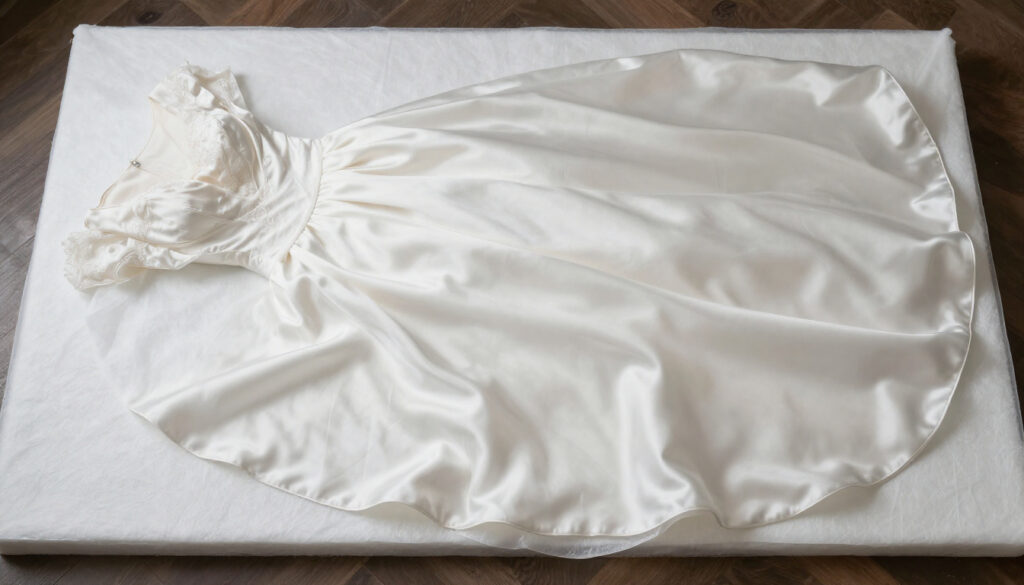
Bridal dress preservation starts becoming important the moment your wedding day ends. What many brides don’t realize is that invisible stains, trapped moisture, and fabric stress begin affecting a gown within days, even when it looks perfectly clean.
Your flowers may dry, your cake may be gone, and your venue may be empty. But your wedding gown still holds every memory of that day. The steps you take in the next few weeks will decide whether it stays beautiful for decades or slowly begins to fade.
What Happens to a Wedding Dress After the Wedding?
A wedding dress starts aging the moment the celebration ends. Invisible stains, trapped moisture, body oils, and environmental exposure can begin changing the fabric within days, even when the gown looks clean.
Most brides hang the wedding gown inside a closet and think, “I’ll take care of this later.” That is when the troubles begin.
Why Invisible Stains Are a Bigger Risk Than You Think
Invisible stains often cause more damage than visible ones. Champagne, sweat, cake frosting, perfume, and even body oils may look harmless at first, but their chemistry changes over time.
How Fabric Aging Begins Immediately Without Proper Care
Silk can turn yellow. Tulle can become brittle. Lace can become weak and even tear. This is due to light, air, and moisture. If left unprotected, your wedding dress begins to deteriorate immediately. Regular storage won’t cut it.
What is the major difference between wedding dress preservation and regular dry cleaning?
Standard dry cleaning focuses on visible stain removal. Professional preservation focuses on chemical stabilization, structural support, and long-term fabric protection.
| Feature | Standard Dry Cleaning | Express Professional Preservation |
| Primary Goal | Surface stain removal | Structural & chemical stabilization |
| Cleaning Agent | Traditional solvents | Eco-friendly liquid silicone |
| Packaging | Plastic or paper bag | Acid-free museum-grade chest |
| Long-Term Protection | Vulnerable to yellowing | 100-year anti-yellowing protection |
| Accessories | Dress only | Dress, veil, gloves, garter |
What Causes Bridal Fabrics and Details to Be More Delicate?
Wedding dresses typically feature several layers, lace overlays, silk lining, and exquisite hand-beading. Each fabric type requires a different treatment. Regular cleaning might damage delicate embroidery or loosen beads.
Why Preservation Emphasizes Longevity, Not Only Cleanliness
A clean wedding dress is the epitome of beauty. Preservation makes sure it looks good twenty years from now. It stops aging in its tracks, preventing yellowing, fiber weakening, and environmental damage.
What Does Reliable Bridal Gown Preservation Actually Involve?
Professional bridal preservation combines inspection, stain treatment, fabric-safe cleaning, and museum-grade storage designed to protect your gown for decades.
What Steps Are Generally Included in a Professional Preservation Procedure?
Inspection of every fabric section before washing
We go through the entire dress meticulously to determine its requirements
Cleaning treatment that is gentle and specific to bridal materials
Each stain is treated with the utmost care
Dresses are subjected to cleaning methods that are controlled and gentle
Gentle techniques that clean without any damage at all are employed
Acid-free packaging designed for long-term storage
Special materials that do not promote yellowing are used
Folding that is structured to avoid permanent creases
The shape is protected, and the formation of permanent creasing is avoided
Great preservation does not compromise on quality. The right procedure is followed for each and every step.
Why Is Timing So Crucial After the Wedding?
The sooner preservation begins, the better the chances of removing invisible stains before they permanently bond with the fabric. Waiting too long often turns removable stains into permanent discoloration.
How the Postponement of Preservation Can Lead to Irreversible Damage
Time is a significant reason invisible stains become more than just stains. They get deeper and deeper and then become impossible to remove after a few months. What was easy to do last month might become permanent next year.
When Is the Best Time to Start the Preservation of the Bride’s Dress?
Right away. Ideally, during the days or weeks after the wedding. Don’t let months go by. The fresher the dress is, the easier it will be to properly preserve it.
What Should Brides Look for Before Trusting Their Dress?
A trustworthy preservation specialist should offer bridal-specific experience, clear preservation steps, archival storage materials, and complete transparency about how your gown will be handled.
Your wedding dress may be one of the most valuable garments you’ll ever own, so asking questions matters.
Experience handling bridal-specific garments
Find out the number of wedding dresses that have been saved by them before
Uncomplicated preservation steps
They should describe in detail what measures they will take
Use of fabric-safe materials and methods for storage
Proper techniques and acid-free packaging
Readiness to give clear and open answers to questions
Excellent providers walk you through their procedure
Local knowledge and responsibility
You can visit and see where your dress will be treated
We match these parts because your dress deserves nothing but the best care.
Why is Local, Hands-On Preservation Important for Bridal Gowns?
Local preservation reduces shipping risks, allows direct communication, and creates greater accountability throughout the cleaning and storage process.
When a gown stays close to home, brides usually feel more confident about where it is and how it’s being handled.
How Local Care Cuts Risk and Increases Responsibility
Sending dresses from one part of the country to another brings along risk. Sometimes parcels get lost or damaged. If you use a local service in Glendale, your dress remains near you. You can have direct communication with the people who are taking care of it. There is accountability in this situation.
What Personalized Attention Means for Unique Dresses
Each gown is treated differently at Express Cleaners. We do not employ assembly-line techniques. Your dress receives personalized attention from start to finish. The difference is made by that hands-on approach.
What Can Brides Expect When They Choose to Preserve Their Wedding Gown with Us?
A professional preservation process should begin with careful inspection, continue with fabric-safe stain treatment, and end with secure archival packaging designed for long-term protection.
The goal isn’t simply to clean your dress. The goal is to keep it looking as close as possible to how it looked on your wedding day.
Our Unique Method for Wedding Dress Preservation
First, we conduct a meticulous inspection. We thoroughly examine every seam, every bead, every scrap of lace. After that, we proceed to clean with techniques that are especially tailored for bridal materials. Gentle. Thorough. Safe.
We value the sentimental worth of your gown. We emphasize preservation of beauty over a long period of time; hence, your dress will be just as lovely in twenty years as it is today.
Is Bridal Dress Preservation Worth It in the Long Run?
Why Preservation Is About More Than Future Wear
Most brides will not wear their wedding dress again. So, why preserve it? It’s about what it represents. Your dress could be a family heirloom, or it could be something that your children will look at with amazement. But only if it’s preserved well.
How Preservation Protects Both Fabric and Memories
When your dress is immaculate, memories are vivid. The very act of opening a preservation box and seeing your gown just as you remember it evokes feelings. It links you to that important day in a manner that photographs cannot.
What’s the Smart Next Step After Your Wedding?
The importance of your gown does not cease when the reception is over. Clean and store to avoid any future problems. Trust is what differentiates a dress that survives from one that loses its color.
We are always delighted to assist you in the proper way of protecting your bridal gown. Do not postpone the removal of stains or the yellowing of the fabric. Make the smart move now.
Frequently Asked Questions
Q1. How long does preservation take?
Most preservation takes 2-4 weeks, depending on your dress. We inspect, clean, treat stains, and package everything carefully. Rush services can be arranged if you need your dress back sooner.
Q2. Can I store my dress in a regular closet?
Yes, but keep it away from direct sunlight and humidity. Store it in a cool, dry place. Don’t hang it; always keep it in the acid-free preservation box lying flat to prevent stress on the fabric.
Q3. Will all stains be removed?
We remove most stains, especially when treated quickly. However, some older or set-in stains might lighten but not disappear completely. That’s why timing matters so much after your wedding.
Q4. Can I open the box to look at my dress?
You can, but try not to do it often. Each time you open it, you expose the dress to air and light. If you must look, do it in a clean space and reseal it properly with acid-free tissue.
Q5. What about heavy beading or delicate lace?
That’s exactly why professional preservation matters. We handle delicate details with extra care. We use specialized cleaning methods that protect beading, sequins, and lace while still removing stains and dirt.