We will tell you the truth. The things we have encountered during our years at Express Cleaners in Glendale are numerous. Silk blouses with coffee stains. Wedding dresses with wine mishaps. Greased favorite coats. And this is the outcome of our learning: removing stains not only requires scrubbing but also knowing the situation.
The prevailing notion is that a stain is simply dirt on fabric. Nevertheless, it is hardly ever that straightforward. In other words, a stain is a chemical reaction that takes place between a certain substance and the fibers of your clothing.
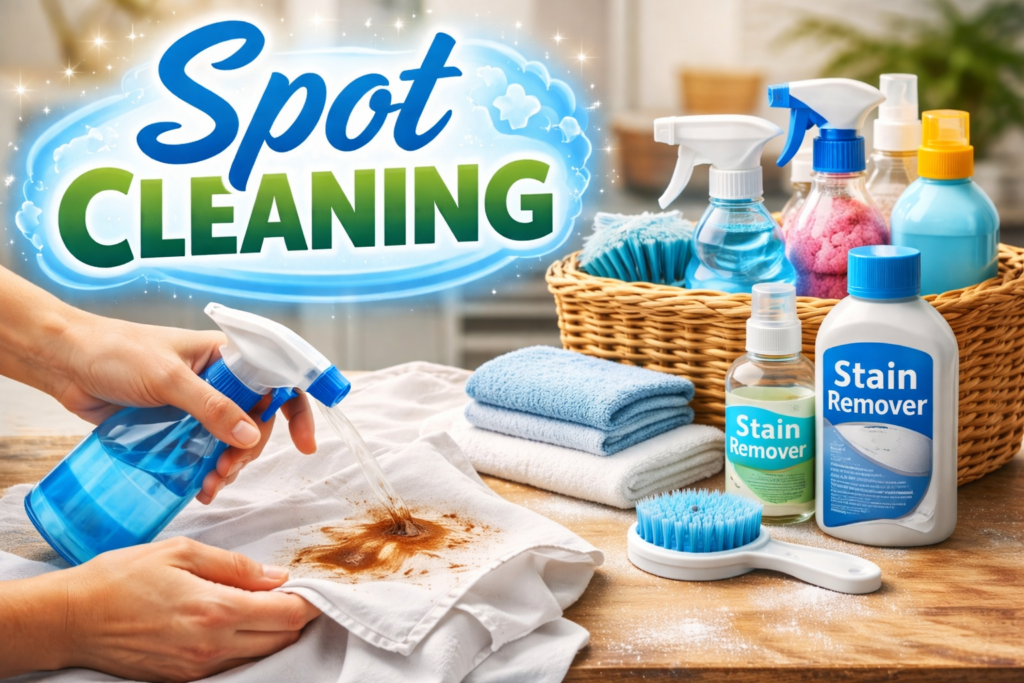
Why Home Remedies Often Make Things Worse
We get calls every week from worried customers. They tried vinegar. They used baking soda. They scrubbed with dish soap. Now the stain is bigger, or the fabric looks damaged.
Here’s the problem: stains change over time. What starts as a surface mark can bond with fabric fibers within hours. Heat from a dryer? That permanently sets most stains.
We see three common mistakes:
- Using hot water on protein stains (this “cooks” them into the fabric)
- Scrubbing instead of blotting (this spreads the problem)
- Mixing different cleaning products (this creates unpredictable reactions)
What Actually Happens in Our Spot Cleaning Lab
When you bring a stained garment to Express Cleaners, we don’t just spray and hope. We follow a process.
First, we examine the fabric. Is it silk? Polyester? A blend? Each material reacts differently to cleaning agents. What works on cotton might destroy rayon.
Next comes spot cleaning analysis. We identify what caused the stain. This matters because oil-based stains need one type of solvent, water-based stains need another, and protein stains need enzymes.
The “Do No Harm” Rule
Years ago, a customer brought in an expensive silk shirt with a small coffee stain. They tried treating it at home with hot water and salt. By the time we saw it, the stain had spread, and the fabric had water rings.
We couldn’t fix it.
That taught us something important. It’s better to do nothing than to do the wrong thing.
Why We Tap Instead of Scrub
You’ve probably heard you should rub stains out. That’s exactly wrong.
At Express Cleaners, we use a technique called tamping. It’s controlled, gentle tapping on the stain. This works because it pushes cleaning solution into the stain without damaging the fabric’s weave.
When you scrub, you create friction that weakens fabric fibers, spreads the stain outward, and creates fuzzy areas on your clothes.
The Chemistry That Makes It Work
Let’s have a short pH discussion. Every stain has a pH level, either acidic (like coffee or wine) or alkaline (like blood or grass). In order to effectively remove a stain, one must first use a neutralization process.
For instance, coffee has an acidic pH level. The tannin remover, which is in the middle alkaline range, is what we use. This not only neutralizes the coffee’s acidity but also separates the stain from the fabric through the use of chemical bond breaking.
Water-Soluble vs Oil-Based Stains
Stains do vary:
- Water-soluble stains (juice, soda, wine) can be cleaned with water-based cleaning agents and are often easier to treat if caught early.
- Oil-based stains (grease, makeup, butter) require special solvents, as water won’t remove them.
Our cleaning process involves the use of professional surfactants. These molecules have a dual nature with one part binding to oil and the other to water. They effectively remove the oil from the fabric through a lifting action.
How Enzymes Attack Protein Stains
Blood. Sweat. Milk. These are protein stains.
We use enzymes (specifically proteases) that break down protein molecules. The enzyme literally eats the protein stain, turning it into smaller pieces that wash away easily. This process needs time and the right temperature.
Professional Standards We Follow
In our industry, there’s something called the Sinner’s Circle; a cleaning principle with four elements:
- Time – How long the cleaning agent sits
- Temperature – Heat level used
- Mechanical Action – Physical agitation
- Chemistry – The cleaning products used
The key is balance. This is where targeted stain removal becomes an art. We adjust these four factors based on each specific situation.
When to Leave It to Professionals
Some stains should never be treated at home:
- Blood on dry-clean-only fabrics
- Unknown stains on delicate materials
- Old stains that have been there for weeks
- Stains on expensive or sentimental items
The cost of professional localized stain treatment is always less than replacing a ruined garment.
Can Every Stain Be Removed?
Some stains can’t be fixed; bleach damage, oxidation from sitting too long, or previous incorrect treatment that set the stain.
Before we start any treatment, we pre-test on a hidden spot. If the fabric’s color changes or weakens, we stop immediately and tell you the options.
What to Do When a Stain Happens
If something spills on your clothes right now:
- Blot it immediately – Use a clean white cloth
- Don’t rub – Press gently to absorb liquid
- Avoid heat – No hot water, no dryer, no iron
- Don’t mix products – Each chemical creates new reactions
- Bring it to us quickly – Fresh stains are easier to treat
Common Questions About Spot Treatment
How long before a stain becomes permanent?
Some stains (like red wine) start bonding within minutes. Others give you days. Heat and sunlight speed up the process.
Do eco-friendly methods work as well?
Modern green formulas are surprisingly effective. They use plant-based surfactants and enzymes that perform as well as traditional chemicals.
Why do some stains come back after cleaning?
This is called wicking. Stain residue deep in the fabric pulls back up to the surface as it dries. It means the stain wasn’t completely removed.
Final Thoughts
Stain treatment isn’t about scrubbing harder or using stronger products. It’s about understanding what you’re dealing with and using the right approach.
At Express Cleaners in Glendale, we’ve spent years learning these methods. You don’t need to become a stain expert. That’s our job.
Next time something spills, take a breath. Blot gently. Then give us a call. We’ll take it from there.